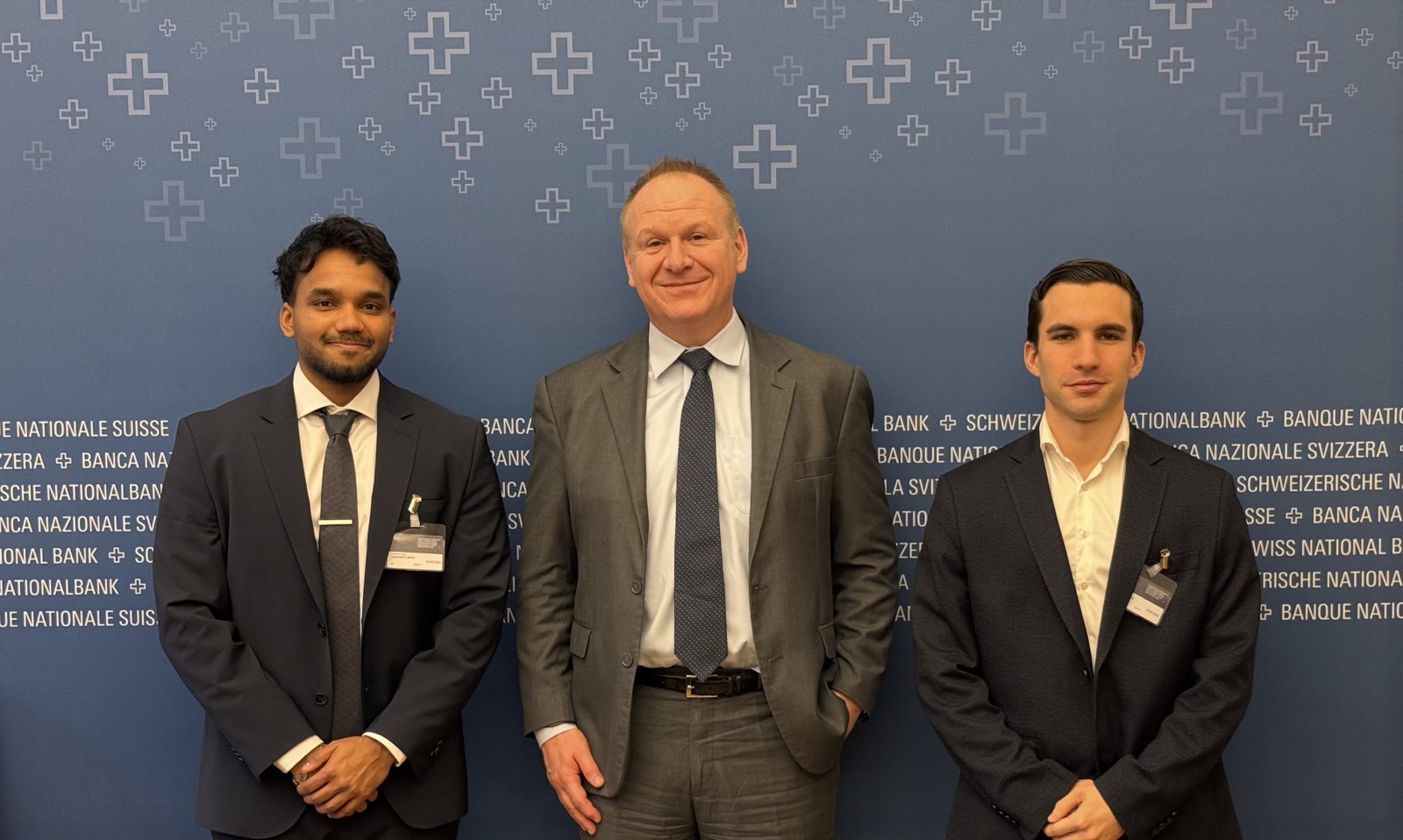

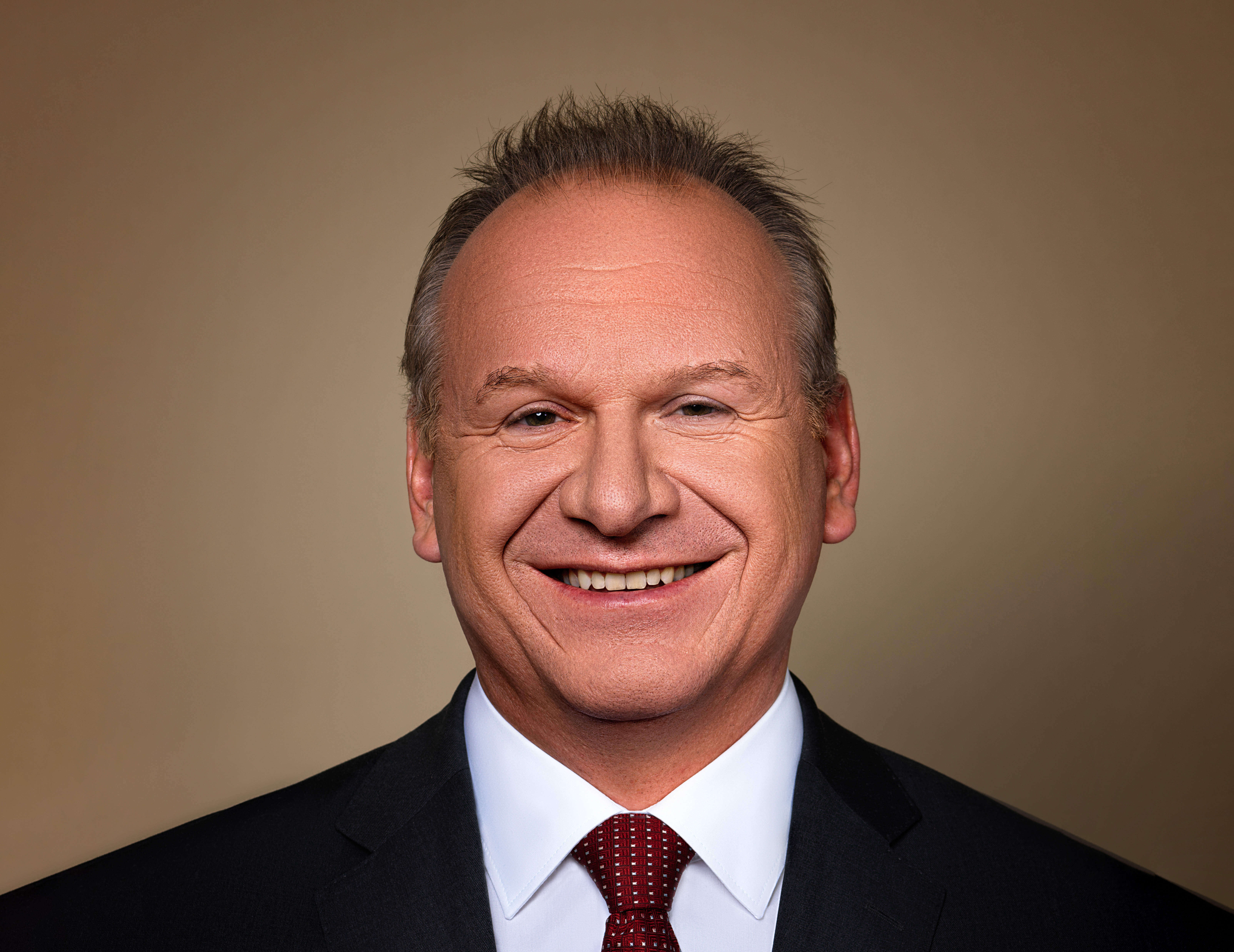
Dr. Thomas MoserAlternate Member of the Governing Board, Swiss National Bank
From your time as Executive Director at the International Monetary Fund to your current role as an Alternate Member of the Governing Board of the Swiss National Bank: looking back on your career, what made the biggest difference in getting you to where you are today?
I believe there are a few fundamental prerequisites that are important. First of all, of course, the technical expertise. You need to acquire the knowledge that is necessary for a given position. At the same time, one must not forget that knowledge becomes outdated relatively quickly. That is why continuous learning is essential.
One point I repeatedly emphasize to my students is the importance of communication.
Learn how to write and communicate clearly. People who can write well and present effectively have an advantage in almost any profession. Many believe that once they have completed university, they can already write well. My experience is quite the opposite: writing is a skill, and it can only be developed through practice.
I personally invested a great deal of time in learning how to write properly. This is often visible even in simple things, such as emails. Some people are able to express their thoughts very clearly and in a structured way, while others are not. Strong communication skills are extremely valuable, especially when it comes to explaining complex topics.
Social skills also play a major role. In most professions, you work as part of a team, so you need to be able to collaborate with others, read signals, and recognise when someone may not be fully satisfied or is facing a problem. Many workplace conflicts arise simply because people do not communicate. Often, it would already help to pick up the phone or briefly walk into someone’s office and ask: “What exactly is the problem?” In many cases, conflicts can be resolved very quickly that way.
Of course, resilience is equally important. Responsibility and pressure are part of many roles. And then there is something that is often underestimated: luck. Even if you meet all the requirements, it still matters to be in the right place at the right time. As Woody Allen once said: “80 percent of success is showing up.”
In my own career, there were several moments where I was simply in the right place at the right time or spoke up at the right moment, which opened up opportunities. You can prepare yourself well; technically, communicatively, and personally. But in the end, every career also involves an element of luck.
Which aspects of your job would most people find surprising if they looked at it more closely?
Many people probably imagine working at a central bank as highly analytical or technical. In reality, a large part of my day consists of meetings. When someone asks me what I do all day, I often say: “Mostly meetings.” I likely spend around 90 percent of my time interacting with others; listening, discussing, asking questions, or preparing decisions together.
This also highlights how important social skills are in this profession. You are constantly working with and through other people.
What might also surprise many is the breadth of topics. In one meeting, you might discuss highly strategic questions, such as monetary policy developments or long-term economic trends. In the next, the focus may shift to budget issues, construction projects, or complex personnel decisions. This mix of strategic and highly operational topics is simply part of everyday work.
Personally, I really enjoy this variety. I have always been a curious person and like to engage with a wide range of topics. I read around 40 books per year, mostly non-fiction on economics, politics, or history. However, I buy significantly more; probably closer to 400 or 500 books per year. (laughs) That may not add up mathematically, but when something sparks my interest, I want to learn more about it immediately.
This curiosity also shaped me during my academic years. I once attended a conference in the United States, where I realised how significant the differences can be when it comes to structuring and presenting ideas. Many students from universities such as Harvard or Princeton were exceptionally skilled at building clear arguments and communicating them effectively.
That is when I understood that these skills are deliberately trained there. Writing and presenting are an integral part of the curriculum. Students constantly write papers, present their ideas, and learn how to structure their arguments with precision. I found this extremely impressive. Afterwards, I even looked into their curricula and bought books on academic writing to improve these skills myself.
Later, I applied this knowledge in my professional work. At the International Monetary Fund, for example, there are mandatory writing courses for economists, and we later introduced a similar concept at the Swiss National Bank. We invited the instructor who teaches these courses at the IMF and organised training sessions for our economists as well. Many were initially sceptical and said: “I have a university degree, of course I can write.” But in the end, the course became extremely popular, because people realised good writing has nothing to do with intelligence and is a learnable skill.
In the context of writing and communication: what role do you see for tools like ChatGPT in academic work or when writing texts?
I find such tools very interesting in general. Especially when it comes to editing, ChatGPT can be surprisingly helpful.
For example, I have noticed that many bachelor’s or master’s theses today are much better structured, because these models are very effective at suggesting clear frameworks.
That said, one has to be careful. A key issue is hallucinations, content that sounds convincing but is simply incorrect. That is why I would always recommend writing the text yourself first. Afterwards, such tools can be very useful for editing.
That is also how I use them myself. I write a draft and then have it revised with a prompt such as “edit for flow and clarity.” Afterwards, I always compare the versions, because the model sometimes changes things I did not intend to change. What I find particularly helpful is asking ChatGPT for critical feedback. For example, I might say: “Please criticise this text. Is something missing? Is the argument logical?” And sometimes I even add: “There is no need to be polite.” (laughs)
I therefore see such systems more as tools, similar to the spell checker in the past. I come from a time when we wrote our Highschool papers on typewriters. If you made a mistake back then, you often had to rewrite the entire page or use correction fluid. Today, digital tools support us enormously when it comes to writing and editing. I can easily imagine that systems like ChatGPT or Copilot will become just as standard in the future as the spell checker is today. That is also why we are currently working on developing a similar tool at the Swiss National Bank. However, one point remains essential: the content must come from the human.
That is why I would recommend writing the text yourself first and then using such tools to refine it and for critical review.
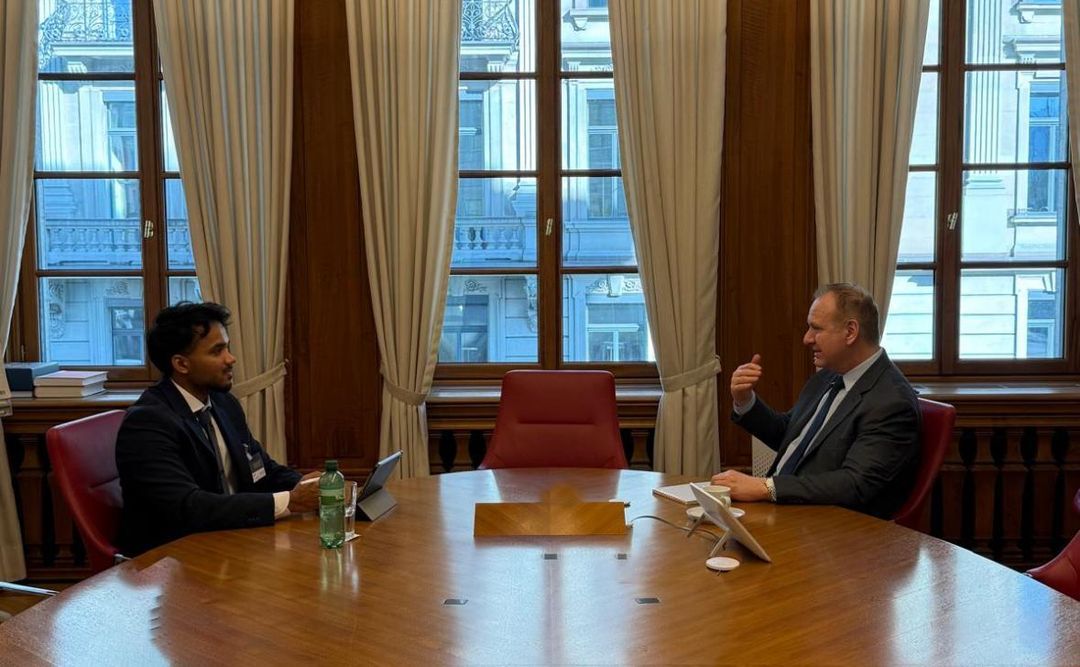
The financial world is changing rapidly - from digitalisation and artificial intelligence to geopolitical uncertainty. Which development do you see as the most significant challenge for Switzerland in the coming years?
Everything you mentioned, digitalisation, artificial intelligence, and new technologies, will undoubtedly be very important. In this area, however, I am relatively optimistic about Switzerland. Historically, Switzerland has shown that it can adapt well to new technologies. We may not always be global technology leaders like the United States, but we are often very strong “followers” who implement new technologies efficiently.
The greater challenge, in my view, lies in the international environment, particularly in the high levels of debt across many major economies. If you look at the United States or many European countries, government debt is significantly higher there than in Switzerland.
Precisely because Switzerland is financially very solid, this comes with an important consequence.
The Swiss franc is increasingly perceived as a safe haven currency in times of uncertainty.
In periods of crisis, capital flows into Switzerland, creating appreciation pressure on the franc. Over the long term, there is also a general appreciation trend, partly driven by differences in inflation, as inflation in Switzerland has historically been lower than abroad. As long as this process unfolds gradually, the economy can usually adapt. The real challenge arises when sharp appreciation shocks occur during crises. While the Swiss economy has repeatedly shown that it can cope with a strong franc, often through higher productivity and specialisation, rapid and significant appreciation can create serious difficulties for many companies.
The role of the National Bank is therefore to smooth such extreme movements. The long term trend cannot be prevented, especially when it is fundamentally justified. However, when crisis driven capital flows lead to very rapid appreciation, we intervene to counteract these effects. This is also one of the reasons why the SNB’s balance sheet has grown significantly in recent years. Many of the foreign currency reserves are ultimately the result of such interventions.
With around CHF 800 billion in foreign currency reserves, the SNB is one of the most influential players in global financial markets. From your perspective, what challenges arise when managing such reserves in a stable, safe, and responsible way over the long term?
The most important point may first be to clarify a common misunderstanding: these foreign currency reserves do not arise because we deliberately aim to build wealth like a traditional investor. They are primarily the result of monetary policy. For example, when we intervene during periods of strong appreciation of the Swiss franc, we sell francs and purchase foreign currencies. This is how these reserves are created. The size of the portfolio is therefore not the result of an investment decision, but a consequence of monetary policy measures.
A good example of this was the situation surrounding Credit Suisse. As an international bank, it suddenly needed very large amounts of liquidity in US dollars.
In such moments, it becomes clear why foreign currency reserves must be immediately available at all times. For example, US government bonds from our reserves could be used as collateral to obtain short-term US dollar liquidity through credit lines with the Federal Reserve.
This immediately highlights a key challenge. We must always have sufficient liquidity available. Our investments need to be structured in a way that allows them to be mobilised quickly when required, whether for monetary policy operations or to stabilise the financial system. Another important aspect is exchange rate risk. Our assets are largely denominated in foreign currencies. Unlike a traditional investor, we cannot simply hedge this risk, as currency hedging would often conflict with our own monetary policy.
This is why we place strong emphasis on diversification. The largest share of our portfolio remains in government bonds, but we also invest in other asset classes. The Swiss National Bank was one of the first central banks to allocate part of its reserves to equities. Today, around 25 percent of the portfolio is invested in equities, broadly diversified across global indices. In addition, we also hold corporate bonds.
Our approach is deliberately broad and largely passive. We do not attempt to select individual securities or outperform the market. Our objective is stability and capital preservation, while maintaining high liquidity.
This illustrates that the portfolio is not primarily about maximising returns. It is about ensuring stability, maintaining liquidity, and preserving the ability to act in monetary policy.
How does the SNB deal internally with situations where models and reality begin to diverge?
This happens quite regularly. When I joined the National Bank in 1999, the SNB was still operating with a monetary targeting framework. In the 1990s, however, it became clear that many models based on money supply were no longer functioning reliably. Financial innovation had significantly changed the velocity of money, and as a result, some of the previous relationships broke down. This is why the National Bank fundamentally adjusted its monetary policy framework in 2000.
One key lesson from this experience was not to rely on a single model. Today, we work with a range of different models from various schools of macroeconomic thought. We feed them with the same information and then compare the results.
The inflation forecast that we publish is ultimately a consensus forecast that emerges from this overall perspective.
When the models diverge significantly, the situation becomes particularly interesting. We then discuss in depth why one model produces a different forecast than another. Sometimes it becomes clear that a particular model is less suitable in a given situation. At the same time, we do not rely exclusively on models.
The National Bank has a network of delegates for regional economic relations who regularly engage with companies across Switzerland.
These conversations provide us with additional insights from the real economy. For example, if many companies suddenly report that the exchange rate has become a major problem, this serves as an important signal that we can compare with our model results. This is part of our system of checks and balances.
Many students wonder to what extent the models we learn at university, such as IS-LM or Solow, are actually used in practice. Do these models still play a role in the day to day work of a central bank?
Yes, absolutely. Models play an important role in practice, although not always exactly in the form in which they are taught at university. Rather, they serve as tools for structured thinking.
A good example is the classic IS-LM model. Even though it is very simple, I still consider it an excellent framework for thinking about economic relationships in a structured way.
Models help to break down complex problems and develop initial hypotheses. In practice, the process often looks like this: when a new economic issue arises, you first analyse it through the lens of an economic model. This helps to identify the key mechanisms at play. Afterwards, you need to assess whether the assumptions of the model actually hold in reality.
There is a well known quote by the economist Alan Blinder who once said that if you want to solve an economic problem, you have two options, you can ask your uncle or you can use a model. Without models, it becomes very difficult to think systematically about economic relationships.
At the same time, models should never be treated as absolute truth. A good example is negative interest rates. Initially, there was very little experience or clear modelling for such a situation. This meant that we also had to think carefully about how people might actually behave. One key question was whether companies and households would simply hold their money in cash to avoid negative interest rates. This is where economic thinking becomes particularly important. You begin by comparing costs and benefits.
Holding large amounts of cash involves significant costs such as transport, security, and insurance. As long as these costs remain higher than the burden of negative interest rates, money stays within the banking system.
This is exactly where the value of studying economics becomes clear.
It is not just about individual models, but about a way of thinking: analysing incentives, weighing costs and benefits, and systematically understanding economic relationships.
As part of the extended Governing Board of the SNB, your decisions influence the economic stability of an entire nation. How do you personally deal with this responsibility and the associated pressure?
It is indeed a tremendous responsibility. What helps a great deal is that such decisions are never made by a single individual, but always within a committee. Before monetary policy decisions are taken, there is a comprehensive assessment of the situation, involving not only the Governing Board but also numerous specialists who contribute their analyses.
For me personally, it is crucial that all arguments are brought to the table.
One has to think through as many consequences of a decision as possible and engage seriously with opposing views. Especially when someone says, “This is a bad idea,” it is important to allow that perspective and examine it carefully. When you know that all arguments have been considered and the pros and cons have been thoroughly weighed, it becomes much easier to make a decision, even if you know it will not be perfect.
A good example of this is negative interest rates. This measure was highly controversial, and many companies were initially sceptical. In such situations, it is essential to clearly explain why a decision was made. I often asked, “Would you have preferred a significantly stronger Swiss franc?” The answer was usually no. This made it possible to explain that, from our perspective, negative interest rates helped reduce the appreciation pressure on the franc.
My experience is that:
When you communicate openly and make your reasoning transparent, you create a certain level of understanding for the decision, even if not everyone agrees with it.
Another point that is important to me is open dialogue. You can hold completely different views, but if you are willing to listen and exchange arguments, better solutions often emerge. For me, this also means approaching discussions with a certain openness, having your own perspective while remaining willing to learn something new. In the end, it helps to know that decisions are made collectively within the committee, after all arguments have been carefully considered. If you can say that, given the information available today, this is the best possible decision, it becomes much easier to carry such a high level of responsibility.
Were there decisions in your career where it was clear that, regardless of the path chosen, part of society would be dissatisfied? How do you navigate such unavoidable trade offs responsibly?
Situations like this occur constantly in monetary policy. Many decisions inevitably involve trade offs, and no matter which option you choose, one group will be dissatisfied. I sometimes say, half jokingly, that the worst case would be if the same group is always dissatisfied (laughs). If different groups are affected at different times, the system as a whole tends to function more effectively.
If you could share one economic idea or principle with the Swiss population, what would it be?
That is a difficult question. If I had to choose one, it would be a very fundamental principle: incentives play a crucial role.
This may sound trivial, since it is something you learn early on in economics. But in practice, it becomes clear again and again how often it is overlooked. Whenever new rules or policies are introduced, whether in politics, in companies, or within organisations, one should always ask what incentives are being created.
A common example is budgeting within organisations. If next year’s budget depends on how much was spent in the current year, this creates an incentive to spend as much as possible towards the end of the year, even when it is not necessary. These kinds of unintended effects arise precisely because incentives are poorly designed. The same applies in politics. If you want to change behaviour, appeals alone are often not enough. What truly matters is which incentives are put in place and how people respond to them.
This way of thinking in terms of incentives is a central part of economic reasoning. Models and theories help us identify these mechanisms, but in everyday situations, one must continuously ask:
What incentives am I creating right now, and do they lead to the behaviour I actually want to achieve?
You served as Executive Director at the International Monetary Fund and experienced the global financial crisis up close. Which lessons from that period are particularly valuable for Switzerland today?
Crises can generally be viewed from two perspectives. The first is prevention, meaning how to avoid a crisis in the first place. The second is crisis management, meaning what needs to be done if a crisis occurs despite all precautions.
In terms of prevention, the key is to identify risks early. Many financial crises arise either from weaknesses in the financial sector or from excessive government debt. This is why it is essential that banks hold sufficient capital, that regulation functions effectively, and that public finances remain sound. Switzerland is relatively well positioned in this regard. Government debt is moderate by international standards, and financial regulation has been significantly strengthened since the financial crisis.
At the same time, prevention alone is not enough. You also have to be prepared for what happens if a crisis actually occurs.
In such situations, it is crucial to have instruments that allow for rapid action. One example is the role of the central bank as a lender of last resort. Traditionally, this means providing liquidity to banks in the domestic currency. In a globalised financial system, however, this is often no longer sufficient, as international banks frequently require liquidity in multiple currencies.
What has always impressed me is how strongly organisations can focus during crises. In normal times, it can be difficult to align everyone around a common objective. In a crisis, however, it suddenly becomes clear to everyone what is at stake. I remember situations where we said that we would stay the entire weekend, and everyone should bring their toothbrush and toothpaste. No one complained. Everyone understood that this was about something bigger, about the stability of the system.
This clarity of purpose makes a significant difference. For a central bank, the mandate is very clearly defined: to ensure price stability and contribute to the stability of the economy. In times of crisis, this objective becomes very tangible for everyone involved. That is why I would say that the most important lesson from financial crises is the need for both solid prevention and the ability to act quickly and decisively when it matters.
If you could give our generation of students and young economists one message, what would it be?
One message that my PhD supervisor once shared with me has stayed with me to this day. He said:
“If you really want to learn something, do not read the things you already agree with. Read precisely the things you disagree with.”
It sounds simple, but in practice it is quite challenging. It is far more comfortable to read texts that confirm your own views. But that is exactly where you tend to learn the least. When you seriously engage with opposing perspectives, two things can happen. Either you maintain your original opinion, but you understand it more deeply and can justify it more clearly. Or you realise that the other side may actually have a valid point and adjust your position. In both cases, you learn.
I have experienced this myself. In the 1990s, many of us economists were strongly convinced that markets could solve almost all problems. Other schools of thought, especially more community oriented approaches, we frankly tended to dismiss. Interestingly, many of these ideas are now reappearing. When you look at current debates on globalisation, inequality, or social cohesion, you begin to realise that some of these critics may have raised points that we did not take seriously enough at the time.
Another experience from my studies also left a strong impression on me. In a seminar with Bruno Frey, we worked intensively on transport policy and shop opening hours. As students, we were convinced that we had found the economically optimal solution. From our perspective, the argument seemed clear: allowing shops to stay open longer would increase flexibility for consumers, improve competition, and lead to more efficient outcomes overall.
At the end of the semester, we presented our ideas to policymakers from the city of Zurich. We were confident that our arguments would be convincing and that they would simply have to adjust policy accordingly. The opposite happened. The policymakers took our arguments and responded from a completely different perspective. For example, they pointed out that it may not always be desirable to make consumption as easy as possible, and that there may be societal reasons to regulate certain aspects differently.
For us, this was a very valuable learning experience. It made us realise that, beyond the purely economic perspective, there are other viewpoints that are equally valid, even if they do not perfectly fit into an economic model.
That is why my most important message would be to stay curious and open to different perspectives.
Approach discussions with the goal of learning. Go into them asking yourself how you can truly understand the opposing view and what you can take away from it.
Because that is exactly how thinking evolves.